
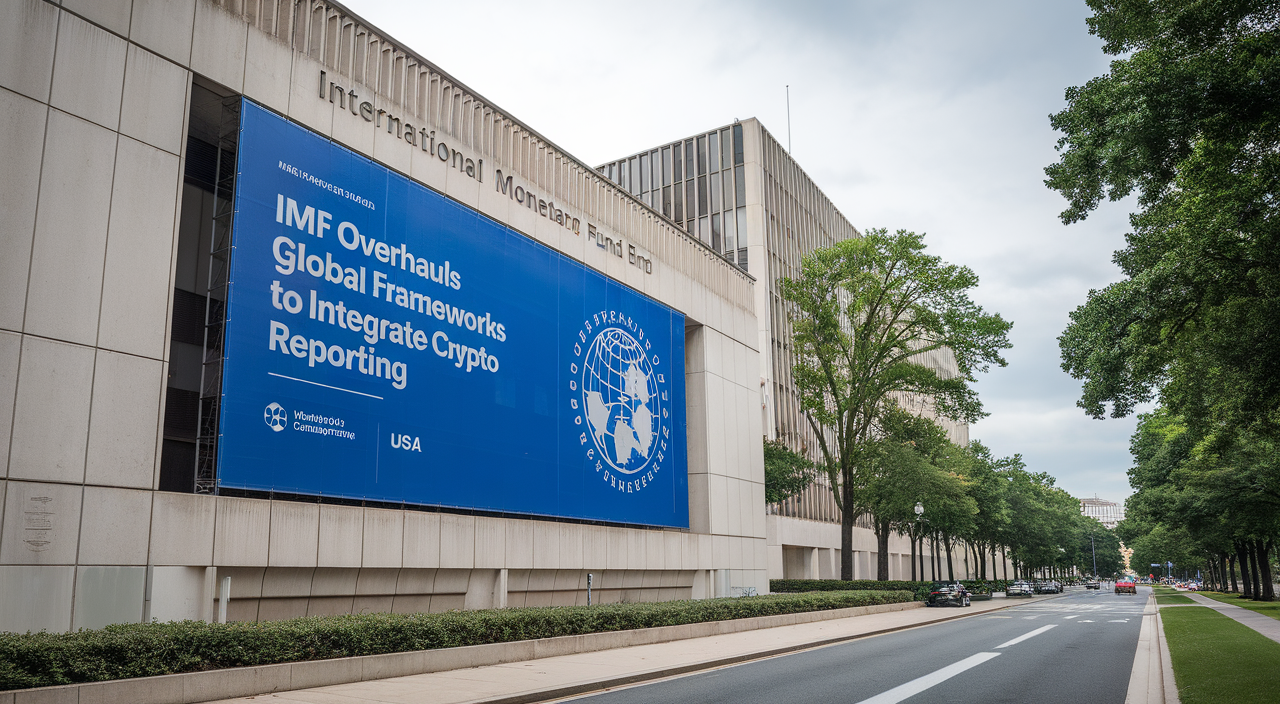
The International Monetary Fund (IMF) has overhauled its global financial reporting standards to formally integrate cryptocurrencies into official balance of payments accounting frameworks. Released today as part of the seventh edition of the Balance of Payments Manual (BPM7), the updated guidelines mark the first comprehensive effort to categorize and track digital asset transactions alongside traditional financial instruments.
Under the new framework, Bitcoin and similar decentralized cryptocurrencies will be classified as non-produced nonfinancial assets. The IMF clarified that such assets—designed to function as exchange mediums without counterparty liabilities—will be recorded as capital account transactions during cross-border exchanges. This separates them from stablecoins or tokenized assets backed by issuer obligations, which will continue to be logged under financial account entries similar to conventional securities.
The standards differentiate digital assets as either fungible tokens like Bitcoin or non-fungible tokens (NFTs), with additional classifications based on liability structures. Transactions involving crypto mining rewards or staking yields will not alter balance sheets if the tokens were previously issued through recognized production processes. Analysts anticipate this distinction will help governments better track crypto-related economic activity while maintaining consistency with existing accounting practices.
Today’s update follows two years of collaboration between the IMF and Financial Stability Board to address regulatory gaps exposed by high-profile crypto market failures. Since 2023, the institutions have conducted joint assessments in multiple jurisdictions including Switzerland, Singapore, and Kazakhstan to test monitoring frameworks. The reforms align with the IMF’s broader push to mitigate financial stability risks identified in its 2024 global crypto policy recommendations, which emphasized improved data collection and cross-border coordination. IMF officials noted that applying consistent measurement standards remains critical as crypto adoption grows, particularly in emerging economies where digital asset usage now exceeds 15% of financial transactions in some markets.
Sources:
https://www.mitrade.com/insights/news/live-news/article-3-713208-20250322
https://www.imf.org/en/News/Articles/2024/02/23/sp022324-changing-landscape-crypto-assets-considerations-regulatory-and-supervisory-authorities
https://www.fsb.org/2023/09/imf-fsb-synthesis-paper-policies-for-crypto-assets/